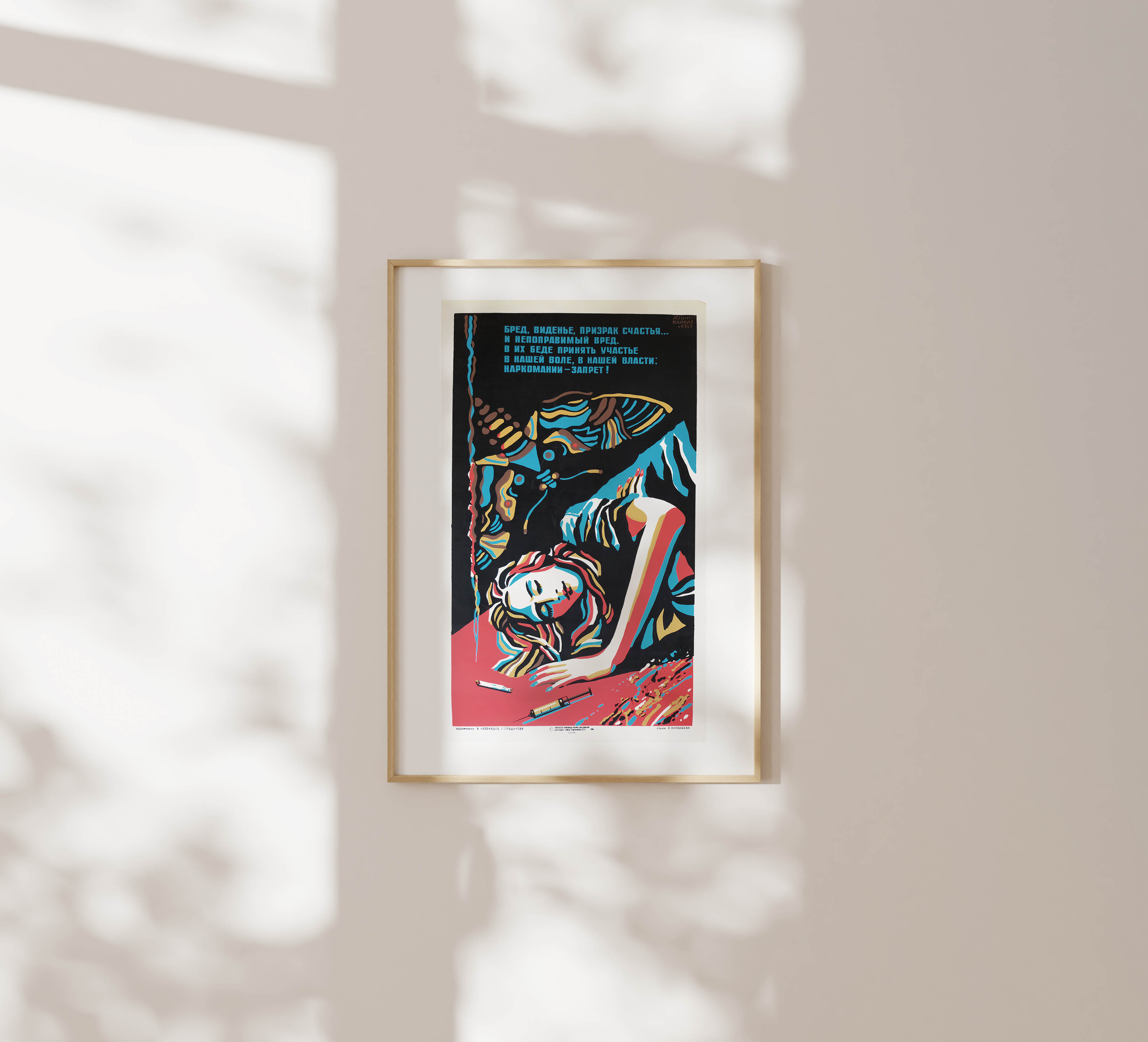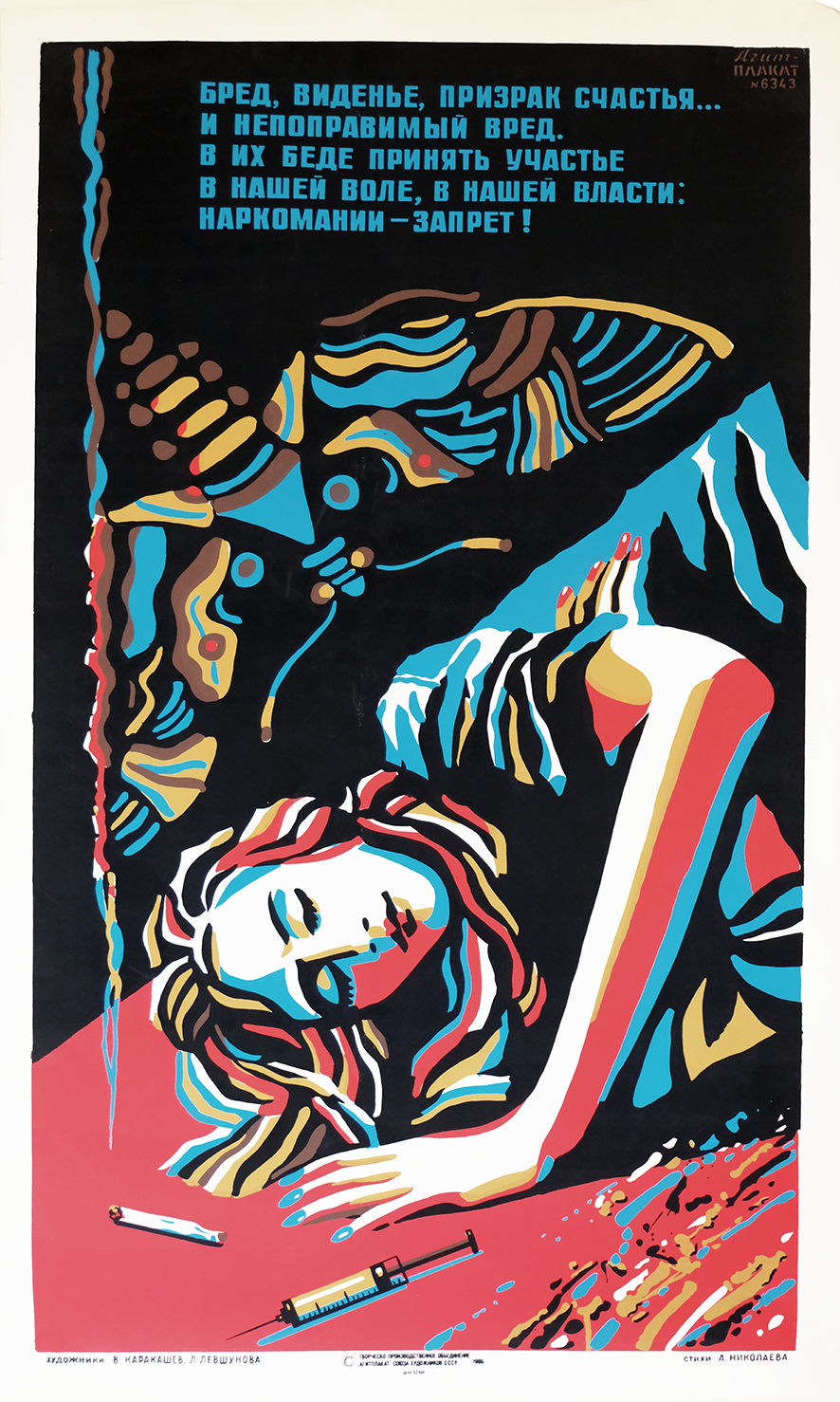
"Drug Addiction is Prohibited" (1988) by Vilen Karakashev and Liliya Levshunova is a silkscreen print made during Gorbachev's perestroika period, when drug use had become visible enough in Soviet society that the state felt compelled to address it publicly. For Soviet propaganda, that was a significant admission.
The image centres on a woman with a calm, almost peaceful expression, her body twisted beneath her in a pose that contradicts her face. A large moth hovers above her in turquoise, coral, and gold. At the bottom, a joint and syringe. The combination is deliberate: the moth in Slavic folklore is a spirit that torments sleepers, associated with the soul leaving the body at night. The woman looks serene because she is absent from herself.
The palette — red, blue, gold, and white against black — comes straight from Soviet poster tradition, built for legibility at distance. The silkscreen technique handles both the hard edges of the syringe and text and the softer gradients in the hair and wings. The flowing hair echoes the moth's wing patterns, tying the woman physically to the thing hovering over her.
Karakashev graduated with honours from the Moscow State Academic Art Institute in 1962 and developed an interest in esoteric subjects following a trip to India in 1982. Levshunova trained at the V.I. Surikov Moscow State Art Institute, where she built her practice around social and cultural messaging. The poster sits at the intersection of both careers.