1
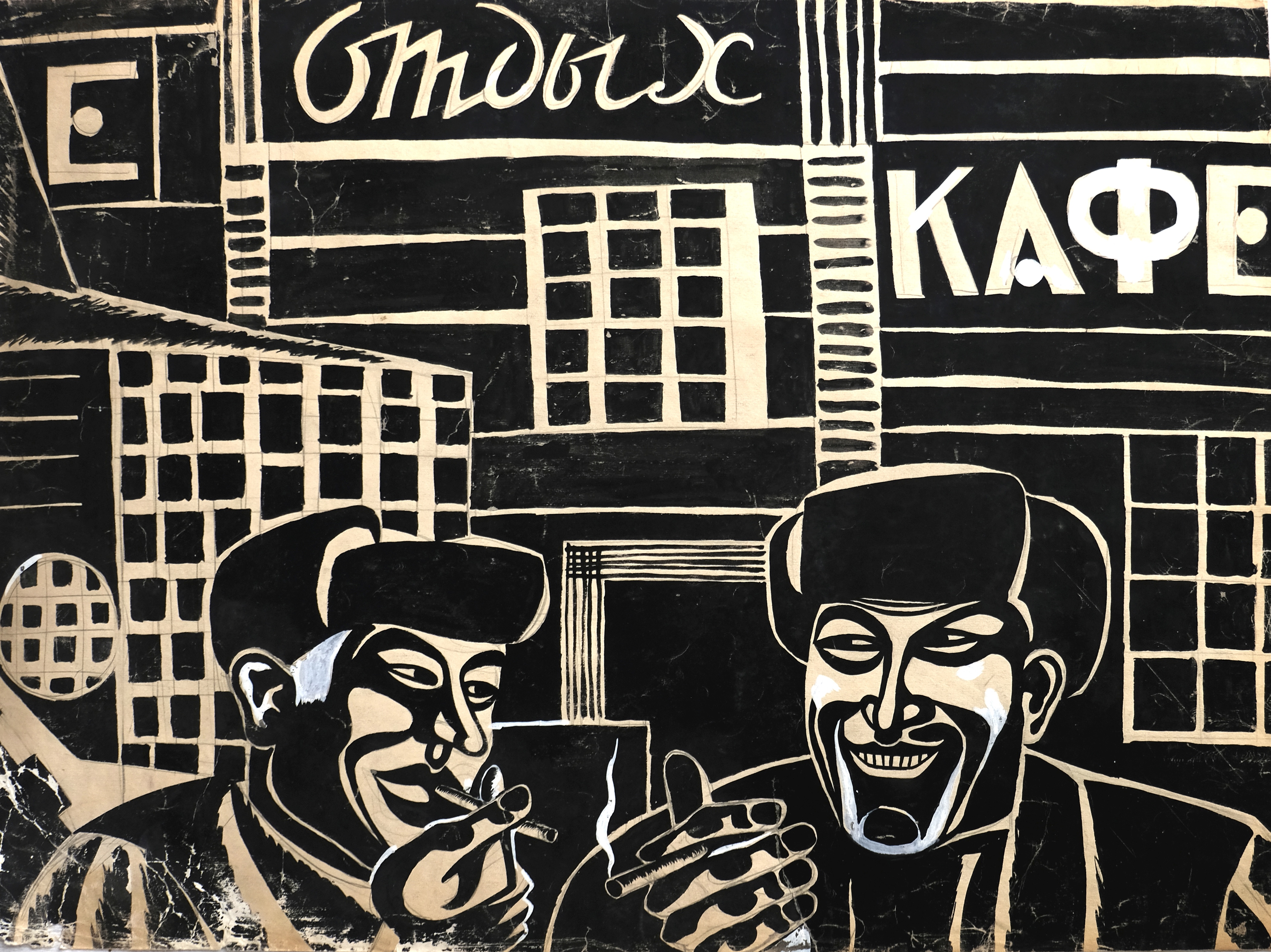
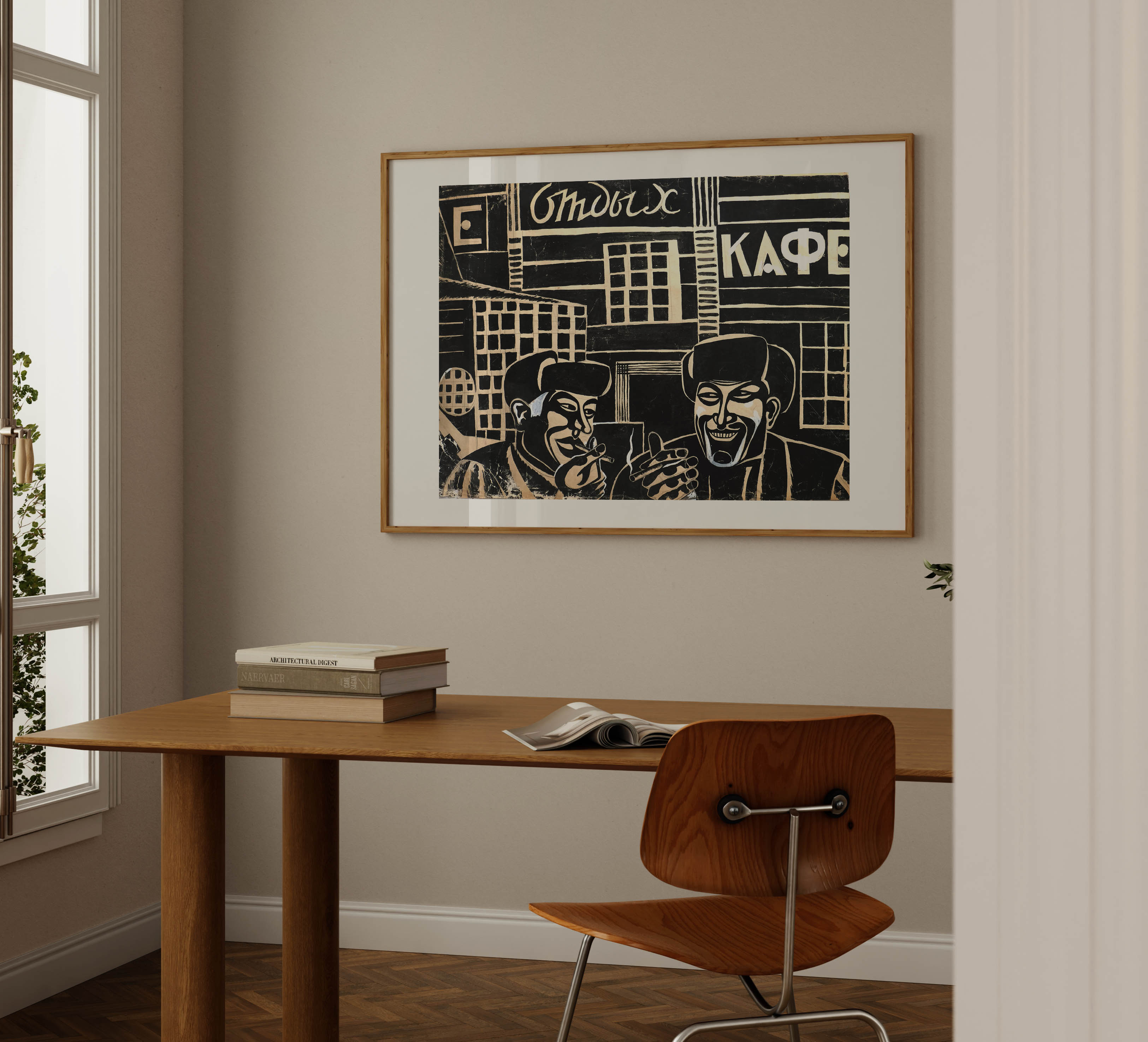
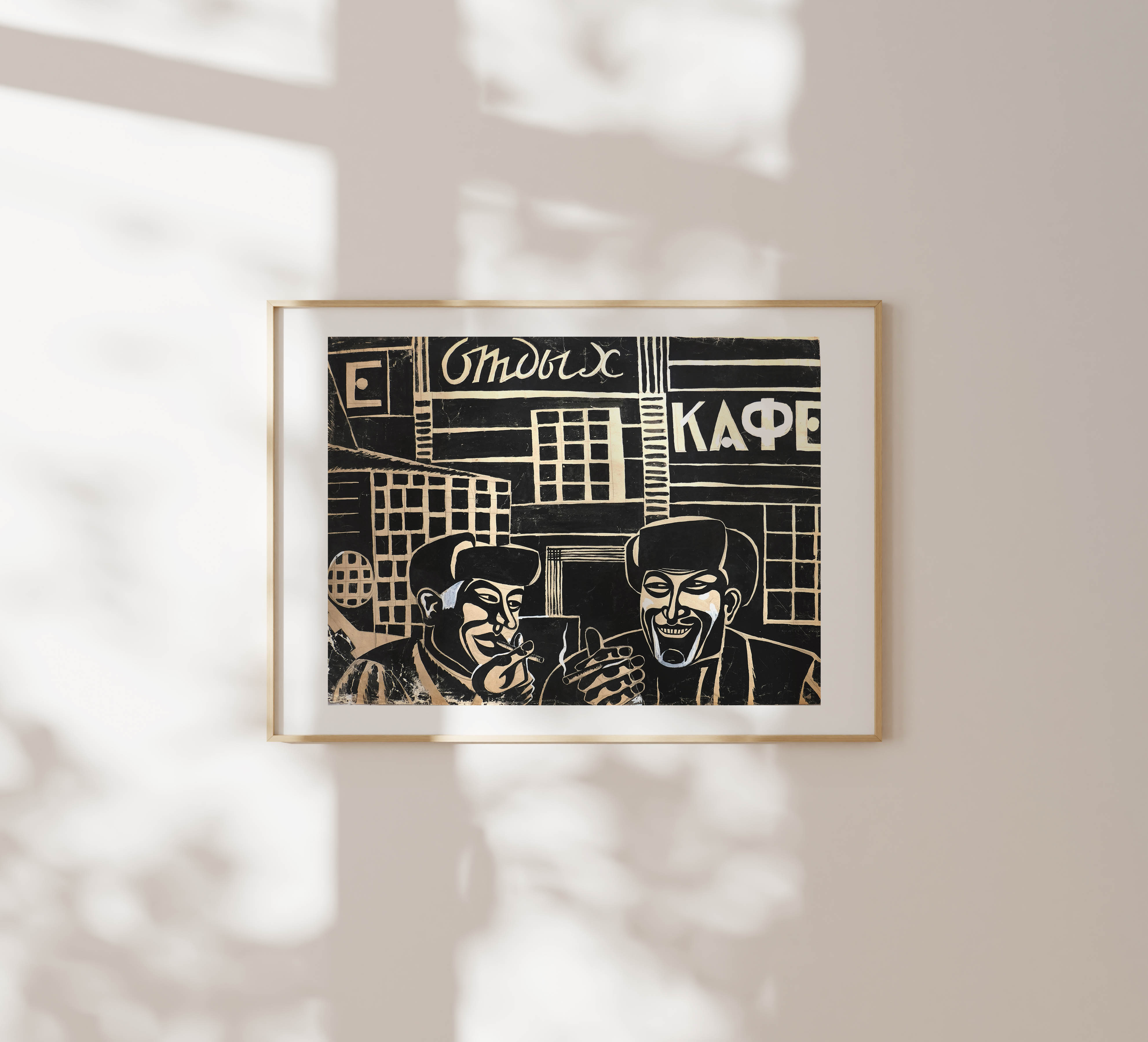
"Cafe Otdykh" (1960s) by Aleksander Ishin is a preparatory sketch for a linocut showing two Central Asian workers sharing cigarettes outside a cafe. Otdykh means rest, and that is what the image is about — a pause, an ordinary moment between two people, nothing more.
That ordinariness was itself a departure. Soviet art of the preceding decades had focused on heroic labour and industrial achievement. By the 1960s Thaw, artists had more room to look at everyday life, and Ishin takes that space without making a point of it.
The composition is built from sharp angles and block shapes — the cafe facade, the windows, the Cyrillic lettering of "Otdykh" across the top. The architecture is geometric and flat, which pushes the two figures forward. They are rendered more expressively than their surroundings, looser, with more weight to them. The contrast between the hard urban backdrop and the casual human interaction at the centre is where the sketch finds its tension.
The black and white medium suits the subject. Ishin uses simplified forms and strong lines, showing the influence of Constructivism without being academic about it. The integration of text into the image is characteristic of Soviet graphic design of the period.
Ishin graduated from the Surikov State Art Institute in 1966. He was named Honoured Artist of the Russian Federation in 2000 and People's Artist in 2011. His work is held in the State Russian Museum, the Tretyakov Gallery, the Museum of Modern Art in Tsaritsyno, and the Marc Chagall Museum in Vitebsk.