9 November 2026By Stephane Cornille
Beyond the Brotherly Kiss: Remembering Dmitri Vrubel
- AUTHOR
- Stephane Cornille
- PUBLISHED
- 9 November 2026
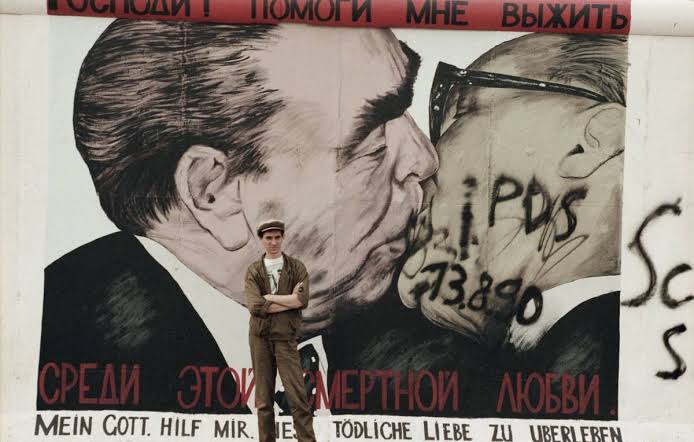
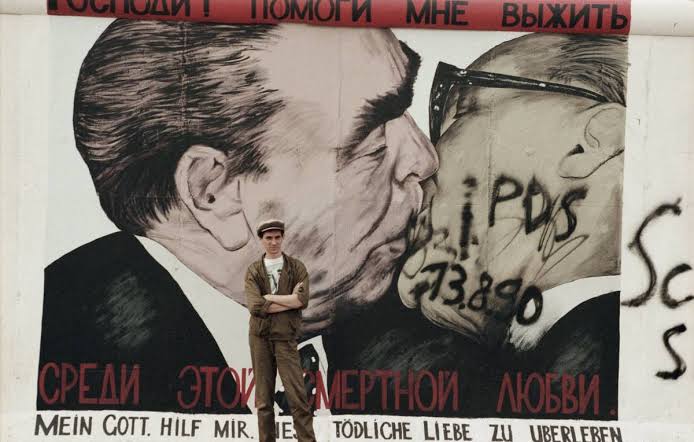
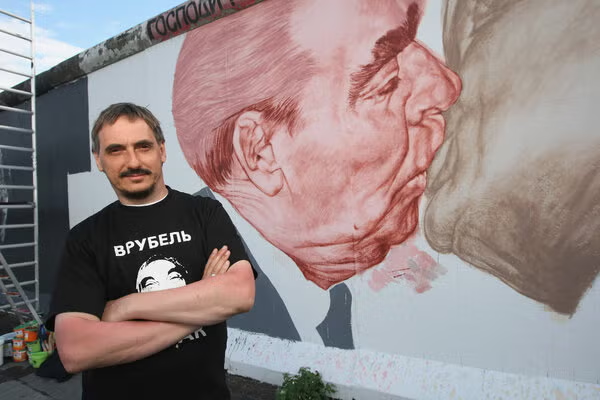
Dmitri Vrubel became internationally famous for My God, Help Me to Survive This Deadly Love, his 1990 mural depicting Soviet leader Leonid Brezhnev and East German leader Erich Honecker kissing on the Berlin Wall. But the work represents only one part of a much larger artistic career.
In this interview, his son Alexander looks back on growing up surrounded by his father's paintings in late Soviet Moscow, helping him prepare images cut from newspapers and magazines, and witnessing the emergence of an artist whose work transformed familiar media photographs into something deeply personal.
He reflects on the complicated legacy of the Brotherly Kiss, the creative underground of the final Soviet years, and why he believes his father's wider body of work deserves far greater recognition today.
1. What is the first memory you have of your father making art?
My earliest clear memories of my father as an artist go back to the late 1980s, during the final years of the Soviet Union.
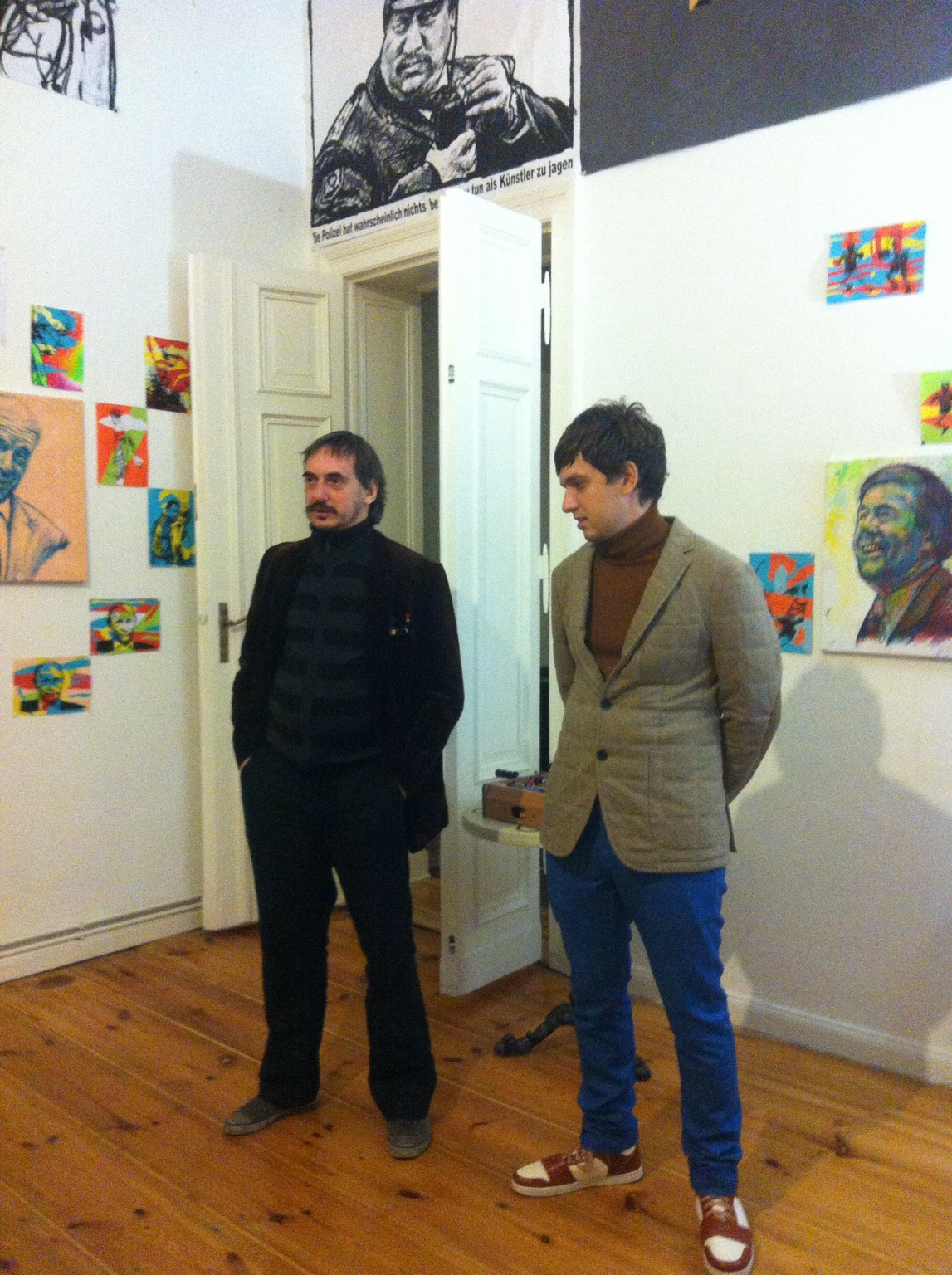
His apartments were always filled with paintings. Art was everywhere. He was constantly painting and regularly organized exhibitions in his own apartment, inviting people to come and see the works.
I remember the stacks of newspapers and magazines at home. He searched them for well-known political figures and other images circulating through the media, then used those photographs as material for his paintings.
He gave us, his children, a task: to cut out the photographs and draw grids over them. Those gridded images would become preparatory sketches for his paintings.
At the time it was simply something we did to help our father. Looking back, I see it as one of my first encounters with his artistic method: taking familiar public images and transforming them into something deeply personal.
2. How did the Brotherly Kiss come about?
What I know from our family history is that the artist and poet Dmitri Prigov suggested to my father that he take the photograph of Brezhnev and Honecker and depict it on the Berlin Wall.
That is the essential story of the work's origin as I understand it. My father took a recognizable political image and transformed it through painting into something with an entirely different cultural life.
The mural eventually became one of the most recognizable images associated with Berlin and that historic period.
3. How did he feel about it becoming so famous?
I think his feelings were complicated. Of course he was proud. He would sometimes describe himself, half-jokingly, as part of Berlin's or Germany's cultural heritage.
At the same time, I believe there was another side to his relationship with that success. He continued making art for almost thirty years after the Brotherly Kiss, creating many other works, yet none achieved anything like its international fame.
I cannot say for certain what he felt privately. But my impression is that this discrepancy mattered to him. He could embrace the mural's success while also wanting people to see the much wider artistic achievement behind it.
4. What did it mean for your father to be an artist in the Soviet Union then?
My father faced various restrictions and difficulties, including encounters with the KGB.
But I also remember the extraordinarily active creative environment around him: artists, writers, musicians, journalists and other members of the intelligentsia. There were large and varied circles of friends, private gatherings, conversations and apartment exhibitions.
Despite the constraints of that time, it was an incredibly lively intellectual and artistic world. Art was not separate from everyday life; it was part of how people communicated and made sense of the reality around them.
5. What's the story behind one of his works that you'd like to share?
Rather than choosing one particular painting, I keep coming back to the memory of the photographs we cut out of magazines and newspapers.
He was interested in images that had already entered public consciousness. Those everyday media images would pass through his own perception and emerge as paintings charged with new meaning.
When I think of the works from that period, I remember not just the finished images but that process — the piles of printed material, the scissors, the grids, and the way a photograph could gradually become a painting.
For me, this is a very personal way of understanding his work.
6. What do you want people to understand about his work today?
If I were to describe my father's creative approach in simple terms, I would say that he took images from the media, passed them through his extraordinarily sensitive inner world, and gave them back to us as paintings.
What was public, political and familiar became personal, emotional and sometimes unsettling.
I believe this aspect of his artistic legacy is still seriously underappreciated. Most people know Dmitri Vrubel because of the Brotherly Kiss. Yet there are so many other paintings and ideas from both before and after 1990 that deserve attention.
I want the art community, curators, museums and collectors to look more closely at the full body of his work, and I want people to have the opportunity to encounter these paintings and the words he attached to them.
There are too few exhibitions and public opportunities to experience his art today. I hope that changes — and that people come to know Dmitri Vrubel not only as the creator of one iconic mural but as the much larger artist he was.
---
Editorial note: The recollection involving Dmitri Prigov is attributed to Alexander's family knowledge; confirm precise historical phrasing and any external supporting interview before publication.


